Building for AppLovin: What ~40% Ad Market Concentration Actually Means for Your Economy
AppLovin isn't just a UA channel, it also shapes your ad revenue. Learn how to audit your LTV, creative quality, and MAX assumptions before they hit your P&L.
Over the past month, we’ve walked through UA plans with several studios running ad-monetized and hybrid games. In those conversations, AppLovin sits on the channel list next to Meta, Google, and TikTok.
That approach made sense a few years ago, but the market has changed. AppLovin’s mediation platform, MAX, now handles about 55% of mediation for top-grossing ad-monetized games, and AppLovin takes roughly 40% of iOS ad monetization revenue. For many studios, that means one company affects both what they pay to acquire a player and how much that player earns them through ads.
Studios need to stop treating Applovin as only a UA channel, because it also shapes the revenue side of the game. Below, we cover how to check whether your models still match what AppLovin is actually paying and delivering, and what to fix first if they don’t.
The mechanism: your algorithm, not your call
MAX runs the auction that decides what each ad impression in your game pays. Those realized eCPMs feed your LTV model. Your LTV model sets how much you can pay to acquire a player, and that sets your ROAS targets. When the auction moves, your UA math moves with it, whether or not anyone on your team has tracked the change.
That’s why building around AppLovin isn’t about producing more creative to chase what the algorithm rewards. You can set floors in MAX, but auction demand decides the eCPM you actually realize.
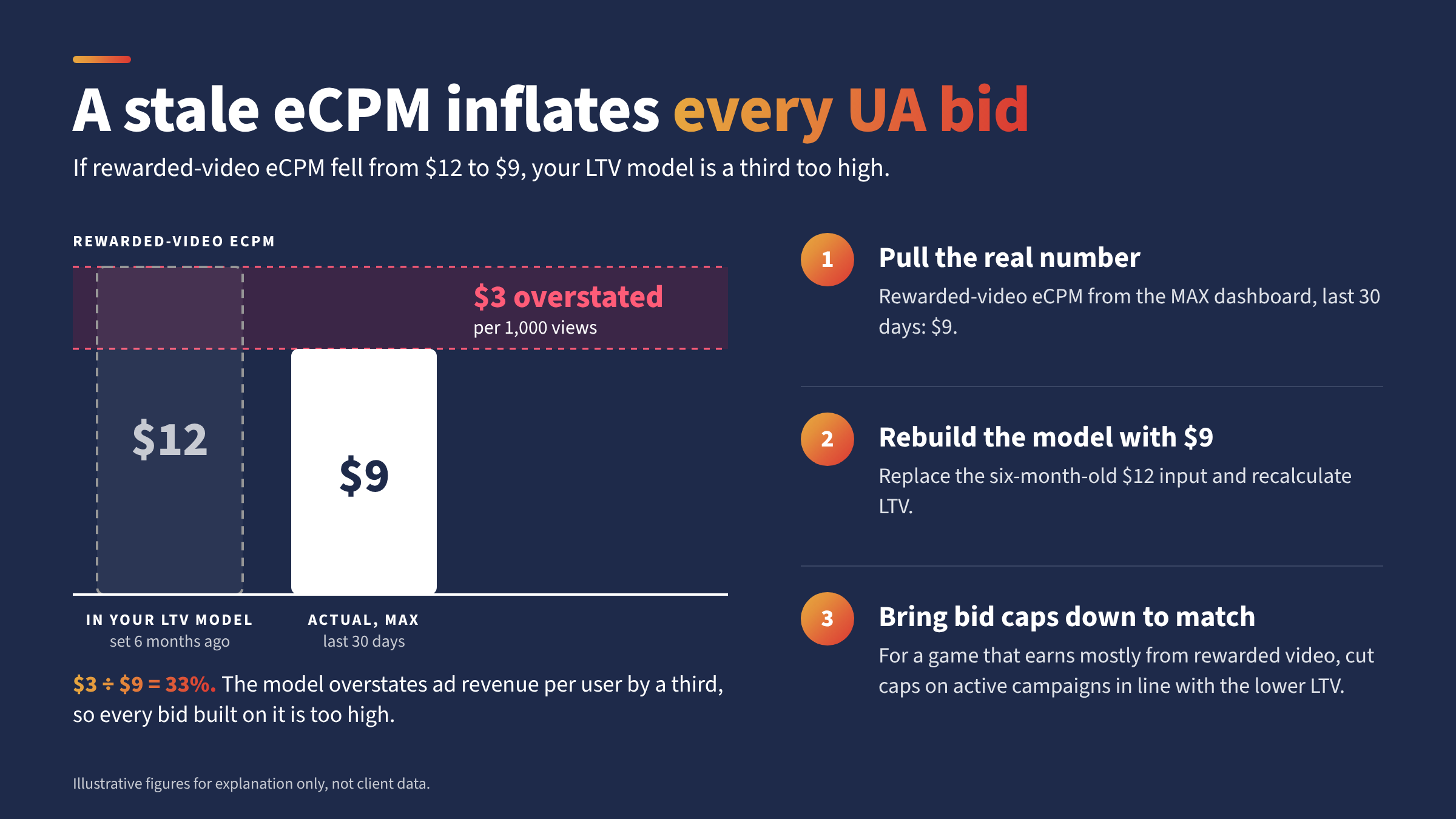
Say your LTV model assumed a $12 rewarded-video eCPM six months ago. Pull your actual rewarded-video eCPM from the MAX dashboard for the last 30 days. If it’s $9, your model has been overstating ad revenue per user by a third, and every UA bid built on it has been too high. Rebuild the model with $9 as the input. For a game that earns mostly from rewarded video, the bid caps on your active campaigns need to come down to match.
The trap: your best creative may be bringing in your worst players
Much of AppLovin’s inventory sits inside other mobile games. Your ad often appears mid-session, as a rewarded video or an interstitial, when players can be quick to tap through without much intent. That means a creative can post a strong click-through rate because of where it ran, not because the people clicking care about your game.
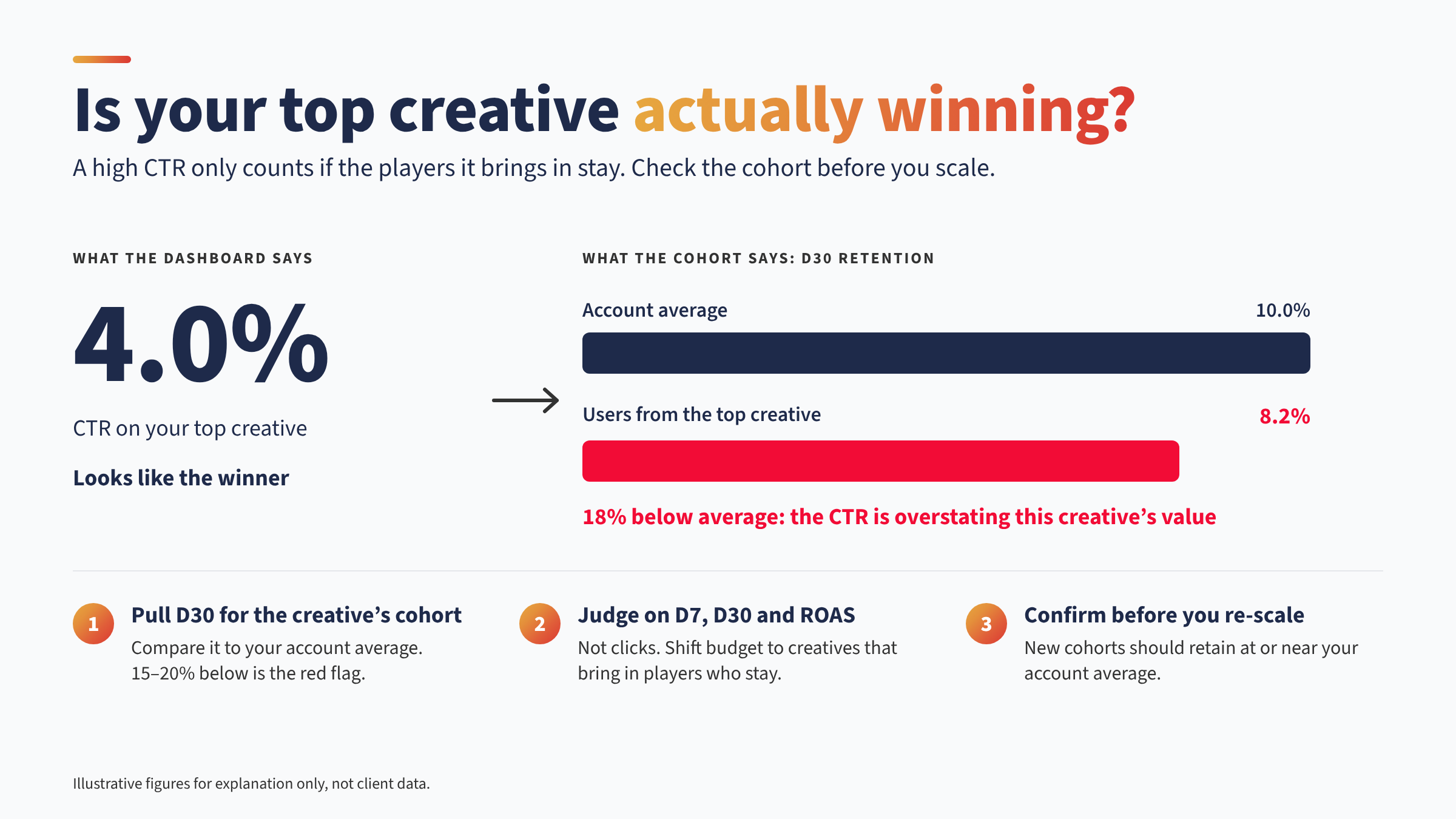
Here’s how to check. Let’s say your top creative is winning at a 4% click-through rate:
Pull D30 retention for users acquired through that creative and compare it to your account average.
If that cohort is retaining 15-20% below average, the CTR is likely overstating what the creative is worth.
Judge it on cohort quality (D7 and D30 retention, and ROAS) instead of clicks, and shift budget toward creatives that bring in players who stay.
Before scaling spend back up, confirm that new cohorts are retaining at or near your account average.
The audit: three questions before you touch your creative pipeline
Run this as a check on your assumptions:
Do your biggest offers land on your heaviest ad days?
Line up your LiveOps calendar against rewarded-ad views per user for the last 30 days. If major offer pushes fall on days when players are already watching the most ads, you’re asking the same players for attention and money at once. That costs retention, and most studios don’t track it.
Is your LTV model using current eCPMs, or an old blended number?
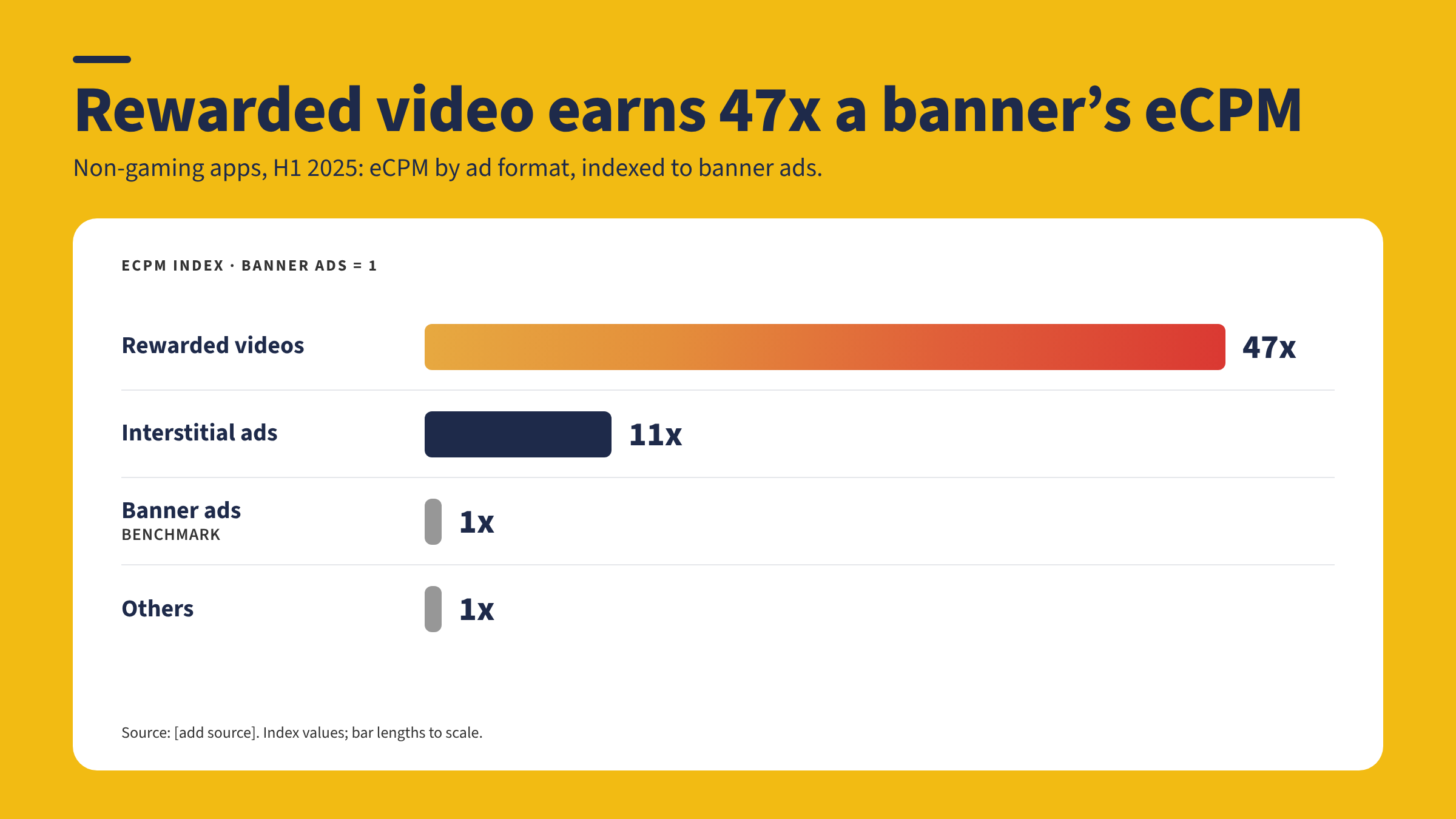
Pull your actual eCPM by format and tier-1 geo for the last full month, and compare it to what your LTV model assumes. Rewarded video typically pays the most of any format - 47x higher eCPMs than banners, to be exact.
Source: Mintegral
A single blended number can hide a large shift if your format mix has changed. If the model’s input doesn’t match what you’re earning now, rebuild it from the real number.
Are you judging MAX on its early numbers?
If you moved to MAX in the last few months, check that you’re not comparing it to your old setup too soon. Performance takes time to settle after a mediation migration, and early results can understate where it ends up. Google, for example, recommends running AdMob mediation A/B tests for at least two weeks before making a call. Know which phase you’re in before you change targets based on the data.
Studios that can answer all three of these questions with current data are building on what AppLovin is actually paying. If any answer relies on an old number or a guess, start there before changing creative or bids.
The bigger pattern: plan around the platforms you depend on
AppLovin is the clearest current example of a broader shift. As ad platforms consolidate, more studios are designing their game economies inside infrastructure they don’t control, using numbers they can’t fully see into.
The studios handling this well treat that dependency as a design constraint from the start. They build offer timing, LTV models, and creative evaluation around what MAX actually pays and what AppLovin’s traffic actually delivers. They also revisit those inputs regularly instead of waiting until ROAS stops making sense.
Here’s a useful exercise for your next team meeting: List the decisions you made this quarter that depend on an AppLovin number, such as a rewarded-video eCPM, retention for players acquired through AppLovin, or a bid cap. Then note when each number was last checked against current data. Start with the ones nobody can put a date on.
If you’d like a second set of eyes on that list, this is the kind of audit that Plunge runs regularly with top mobile studios. Let’s run your audit today, ideally before an outdated assumption shows up in the P&L. Contact our team.