The Economy Audit Checklist: 10 Checks Every Mobile Game Needs Before It Breaks
PlungeGames
Omri Nygate | Head of Economy · ex-Voodoo, ex-Scopely, ex-Playtika · Plunge Games
When metrics are down, the post-event debrief can be one of the most uncomfortable meetings in mobile gaming. The monetization lead thinks the live ops team over-rewarded. The live ops team thinks the economy was already fragile. The product manager is looking at the same data and drawing a third conclusion entirely.
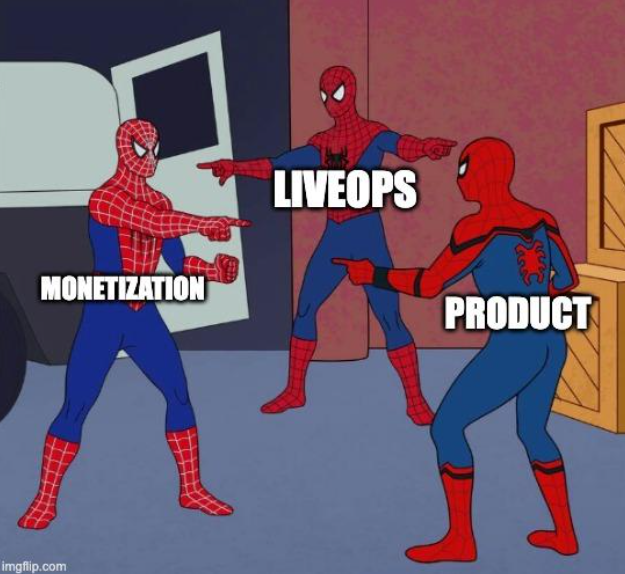
I’ve been in this room many times — at Playtika, at Scopely, at Voodoo. And the conversation almost always goes the same way because there was no shared baseline or structured view of the economy before the event ran.
That’s the gap this checklist is designed to close. The studios that catch problems early are able to do so because they have a more structured way of looking.
These 10 checks are what I run every time I audit a mobile game economy. They're the things I've seen that separate studios who see problems coming from the ones still figuring out what happened.
"Most teams look at wallet balance when they should be looking at net currency sink."
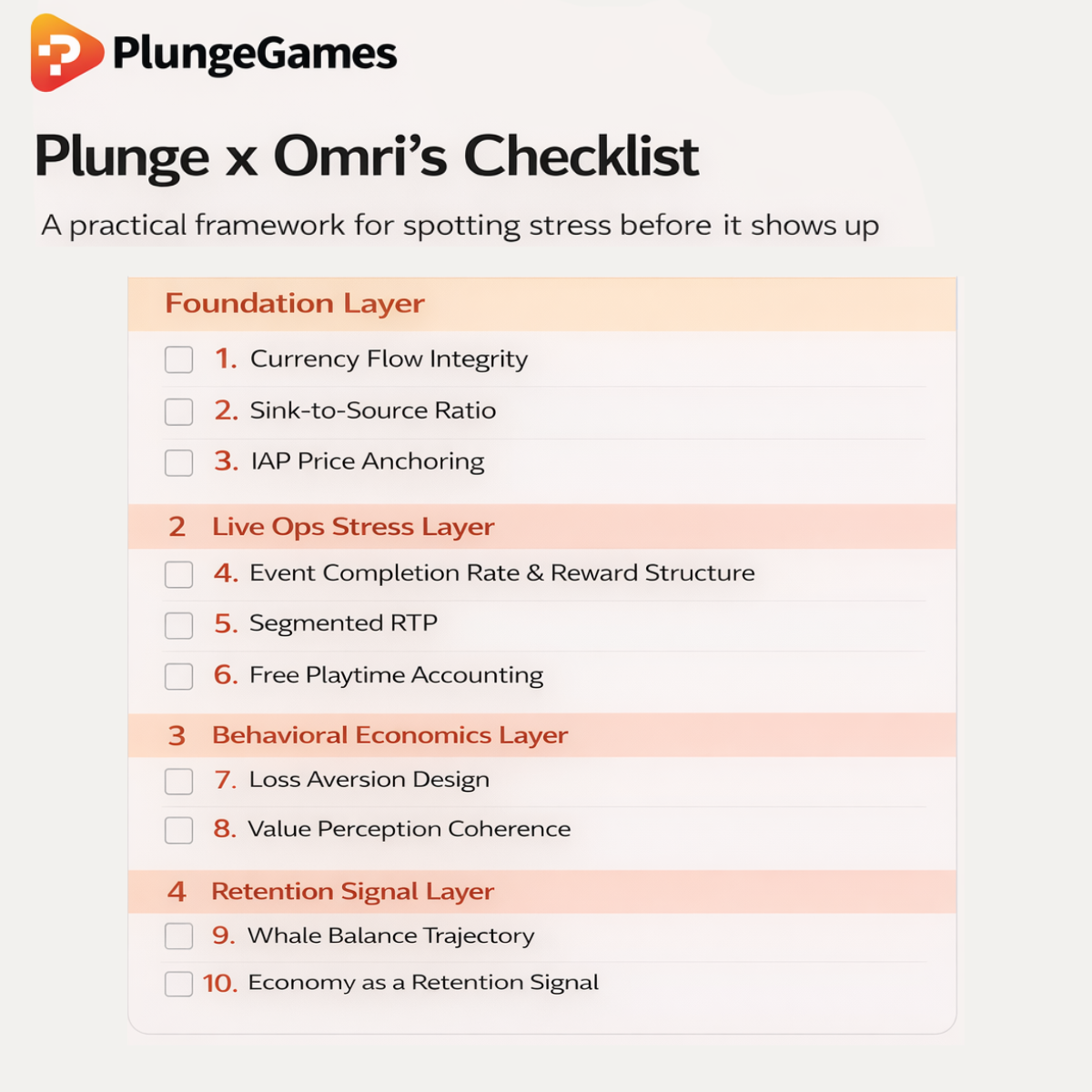
The Foundation Layer (Checks 1–3)
The first three on the checklist are the structural checks. If they’re off, nothing else in the economy works the way you think it does.
Check 1: Currency Flow Integrity
Can you account for every unit of value your players receive and spend? Not just coins and boosters in aggregate — the total value of all resources: soft currency, hard currency, boosters, energy, consumables. Everything.
Most teams only track the metrics that their analytics platform surfaces by default. That usually means coin sink and source. What it misses is the total economic value flowing through the system — how much value a player gets per session, how that compounds over a week of play. Teams end up making economy decisions based on a partial picture.
The studios that have closed this loop can tell you, on any given day, exactly how much value a median player received. That visibility is what makes every other check on this list possible.
Check 2: Sink-to-Source Ratio
Do you know your sink-to-source ratio? Specifically, is your economy net deflationary, inflationary, or balanced? And is that intentional?
Inflation rarely announces itself. It bleeds in slowly through events, seasonal content, battle pass rewards, and offer stacks that each seemed reasonable in isolation. By the time it shows up in your retention data, the problem is six weeks old.
The ratio number itself is less important than whether you know what it is and whether it’s moving in the direction you chose.
I believe EverMerge is an example to look at here of what happens when this check gets skipped for too long. The game generated a huge amount of revenue - enough to lead to their recent acquisition by JetSynthesys. But they’ve had their own share of game economy setbacks. In one recent example, the team tried introducing a new currency (Diamonds) as the core currency and tied it to game progression — economy evolution, they called it. The result was that they still had the same underlying problem (balances were inflated and premium currency was losing its value), but now they also lost player trust and added friction to the buying experience (Reddit player comments here, here, and here) .

Diamonds were eventually phased out (they’re not in current game guides, for example), and my takeaway is that you should always first understand what your economy actually needs before shipping a feature and trying to make it work.
Check 3: IAP Price Anchoring
What is your first purchase offer? What is the second? Is there a logical progression, or did different people set different prices at various points in the product's history without anyone owning the anchoring strategy?
Anchoring problems are invisible in isolation. No single price looks obviously wrong, so nobody flags it. But IAP conversion quietly suffers when players have no reliable frame of reference for value. The player who would have converted at a clear $4.99 anchor never does, because an earlier offer primed their expectations incorrectly.
I saw this play out directly in a game I worked on. Second-time conversion was unusually low, and the culprit turned out to be the gap between the first-time deposit (FTD) offer and the standard store prices. The FTD offer was so strong that the regular store felt like a bad deal by comparison — $5 giving 20% of what $50 gave. Players felt like they were being penalized for spending again. No individual price was wrong. The framing across offers had just never been designed as a system.
The Live Ops Stress Layer (Checks 4–6)
The foundational checks look at the economy in steady state. These three look at what happens when you put it under event pressure, where most studios first notice something is wrong.
Check 4: Event Completion Rate and Reward Structure
What is your event completion rate, and is it sustainable? A high completion rate feels like a win. Sometimes it is. More often than not, though, it means the event was over-generous and you have quietly given your most engaged players more value than intended.
The patterns I watch for are consistent:
Completion rate so high the event has no real tension
Reward-per-tier that peaks early rather than at the end (rule of thumb: the last 20% of an event should carry the majority of its economic value)
Reward structures that are linear rather than back-weighted
Royal Match is a useful benchmark here. Dream Games deliberately gives 'dry' players — those who have burned through their resources — non-economic rewards (e.g. stars for castle decorations) that maintain engagement without inflating the economy. The result feels generous without materially disrupting the balance sheet.

Check 5: Segmented Return-to-Player (RTP)
Do you know what each user segment's economy actually looks like? Is it producing the RTPs you intended for each player tier?
Segmentation without understanding RTP is one of the most common live ops mistakes I see. Teams build a whale track or a mid-spender offer without modelling what different reward levels mean for each player segment's economy. The result is a whale track that over-delivers (devaluing future offers) or a mid-spender track too thin to convert.
The question isn't whether your segmentation exists. It's whether you know what each segment's economy looks like and whether it's moving the way you want.
Check 6: Free Playtime Accounting
How much free playtime does a player get in a day? In a session? And do you know how that changes across segments?
Most teams I’ve worked with haven't run this check. Maybe because it sounds basic. But knowing how long a free player can play before hitting a friction point determines whether your economy is actually creating conversion pressure or simply hoping players will spend. Give too much free playtime and IAP spend never feels necessary. Too little, and players don't have enough free time to fall in love with the game before they hit the wall.
The Behavioral Economics Layer (Checks 7–8)
This is where economy design meets player psychology. Most studios underuse these levers because they don’t understand what value means in their specific game. Trying to shape perception without that grounding simply doesn’t work.
Check 7: Loss Aversion Design
Is loss aversion built into your conversion mechanics? And if so, is it calibrated correctly?
Too much fear of loss and players churn; too little, and the game lacks the pressure to convert. Getting the right calibration requires deliberate design, not intuition.
The mechanics I look for:
Streak events: A player earns a temporary power-up they’ll lose if they stop playing. This is the endowment effect in action, where people work hard to protect what they feel they already own
Bet mechanics or escalating revive costs: Sunk cost psychology drives continued spend
FOMO structures: The completion window is just outside the player's normal session length. This needs to be precise: if average session length is 20 minutes, the best-converting FOMO event is the one that requires 30 minutes — just far enough outside player habit to create pressure, not so far it feels impossible.
Check 8: Value Perception Coherence
When a player looks at your IAP store, do they understand what they’re getting and how much it’s worth it to them?
This is a gap I see very often. Studios optimize price points and overlook the more fundamental question: does the player actually understand what they're being offered, and do they feel the gap it fills at the moment they see it? A player who doesn't know what a booster does, or how scarce it is relative to what they need, can't evaluate whether an offer is worth it — regardless of the price.
It’s a comprehension problem, so the fix is usually getting the right offer in front of the player at the right moment — when they've just failed a level, when their balance is at zero, when the thing being sold is the exact thing they're missing. Context does more work than price adjustments.
The Retention Signal Layer (Checks 9–10)
Most studios misread economy data and retention data as the same signal. They're related, but they move differently and they tell you different things. These last two checks are about making sure you're acting on the right one.
Check 9: Whale Balance Trajectory
What does your top spenders' balance look like over time? Are they accumulating resources, burning through them, or running at a stable level?
A whale with a growing balance is a whale being primed to stop spending. The game has stopped creating scarcity for them, and without scarcity there's no reason to purchase. You won't see this in revenue numbers until the churn actually happens — and by then you're looking at expensive reactivation campaigns.
A player’s balance level on any given day tells you relatively little. The direction it's been moving for the last 30 days tells you a great deal.
Check 10: Economy as a Retention Signal (with caveats)
The instinct when retention drops is to look at the economy. Usually that's the wrong place to start. Most economy problems show up in monetization and engagement data long before they surface in retention numbers.
There is one exception to this: if a player literally can't continue because they've run out of lives, currency, or boosters, that's an economy problem causing direct churn — and it needs fixing.
The more useful diagnostic isn't "is retention bad?" It's "is the player's economic arc still giving them a reason to come back?" Those aren't the same question. A player with zero balance who has a compelling reason to return is a healthy design outcome — scarcity working as intended. A player with zero balance who has nothing left to play for is a structural problem. Same metric, completely different meaning, with a totally different fix.
The Napkin Rubric — Run This in Your Next Team Meeting
Here are 10 questions. If you can't answer yes to 7, your economy needs a look.
I know how much total value-in (boosters + currency) players receive per session — and how that compounds over a week of play
I know my sink-to-source ratio and whether it's moving in the direction I chose
I know my IAP progression tells a coherent value story from first offer to last
I know my event completion rate — and whether a high rate is a win or a warning
I know what each player segment's economy actually looks like and whether it's producing the RTPs I intended
I know how much free playtime a player gets in a day, and how that changes across segments
I know whether loss aversion is deliberately calibrated in my conversion mechanics — or just incidentally present
I know whether my IAP store tells a coherent value story
I know my whales' balance trajectory over the last 30 days — not just their balance level on any given day
I know whether a player with zero balance still has a compelling reason to come back
The Actual Problem
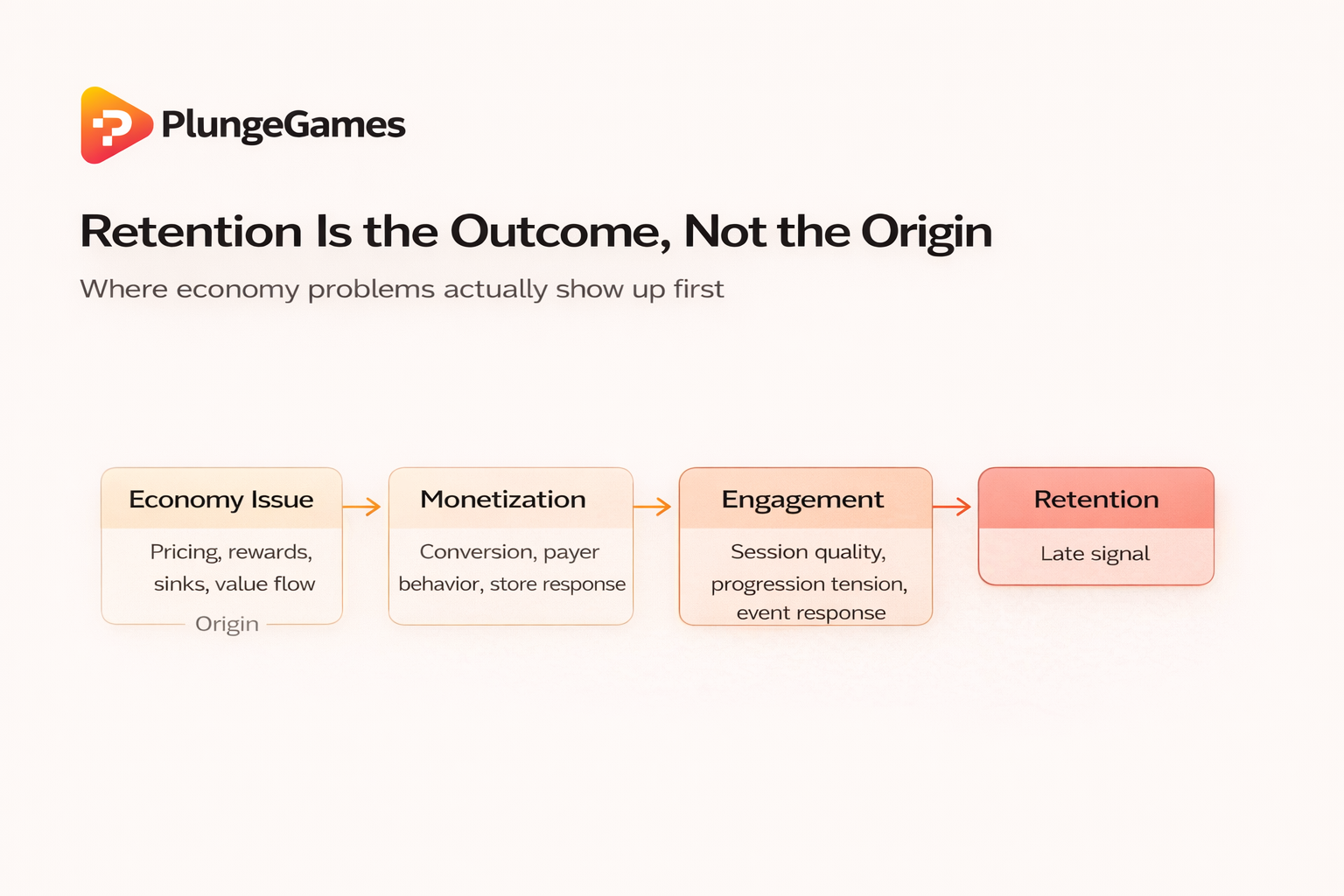
Most game economy problems are caught late because the economy was treated as a foundation set once and never revisited.
Studios focus early on building and shipping: the product, the UX, the experience. Those things are critical, but it means that by the time a game is at scale, the economic foundation was laid under different conditions — a smaller DAU, a lighter content cadence, a different competitive context. What held at 50K DAU can fail at 500K.
The gap I see most consistently is a lack of foresight about how the economy will be stressed three to six months from now — what live ops decisions will be made against it, what content cadence it'll need to support, what player expectations it'll need to meet. That conversation is hard to have without a structured starting point.
"When was the last time you ran a structured economy audit — not because something broke, but because you wanted to know before it did?"
That's what this checklist is for, to start a conversation not just after something breaks, but before.