The First Session Is Not An Introduction. It's A Negotiation With The Brain.
The First Session Is Not An Introduction. It's A Negotiation With The Brain.
The principles behind first sessions that make players come back before they even realize they want to.
There's a window of time that every game studio should be obsessed with, and most underestimate.
I've reviewed early session data across enough games to see the same pattern repeat: strong Day 1 numbers, brutal Day 7 drops, and when you trace it back, the problem almost always starts in the first five minutes. And what happens inside that window doesn't just determine whether players enjoy the experience - it determines whether their brain decides, on a level they'll never consciously access, that this game is worth coming back to.
This isn't about tutorials or onboarding flows. It's about something more fundamental: the emotional and neurological experience you create before the player has any real reason to care.
The best studios think about this very deliberately. And while the execution varies wildly across genres and platforms, the underlying goals are surprisingly consistent. There are ground rules. Principles that can go in a hundred different directions, but that the most successful early sessions are almost always built on.
TL;DR
Make Them Feel Like Natural, Not A Beginner
Don't Just Give Them A Win. Make Them Feel Rich
Confusion Causes Churn, So Keep the Experience Clean
Engineer the Habitual Hook in the Core Loop
Here's how I think about them.
Ground Rule 1: Make Them Feel Like a Natural, Not a Beginner
The first thing a player should experience isn't an explanation of your game. It's your game.
Drop them into the core loop immediately, with just enough scaffolding to keep them from drowning (and not a pixel more). But here's where the craft really lives: you need to calibrate the difficulty of that first experience with surgical precision. Too easy and the win feels hollow. Too hard and you frustrate players before they feel attached. The sweet spot is hard enough that success requires genuine engagement, easy enough that success is almost certain.
When you hit that balance, something shifts in the player's brain. The internal monologue isn't "oh, that was easy" - it's "I'm actually good at this." It's the moment the dopamine system starts connecting your game to the feeling of competence. That neurological association, formed in the first few minutes, is the invisible foundation that session length, retention and conversion are all built on.
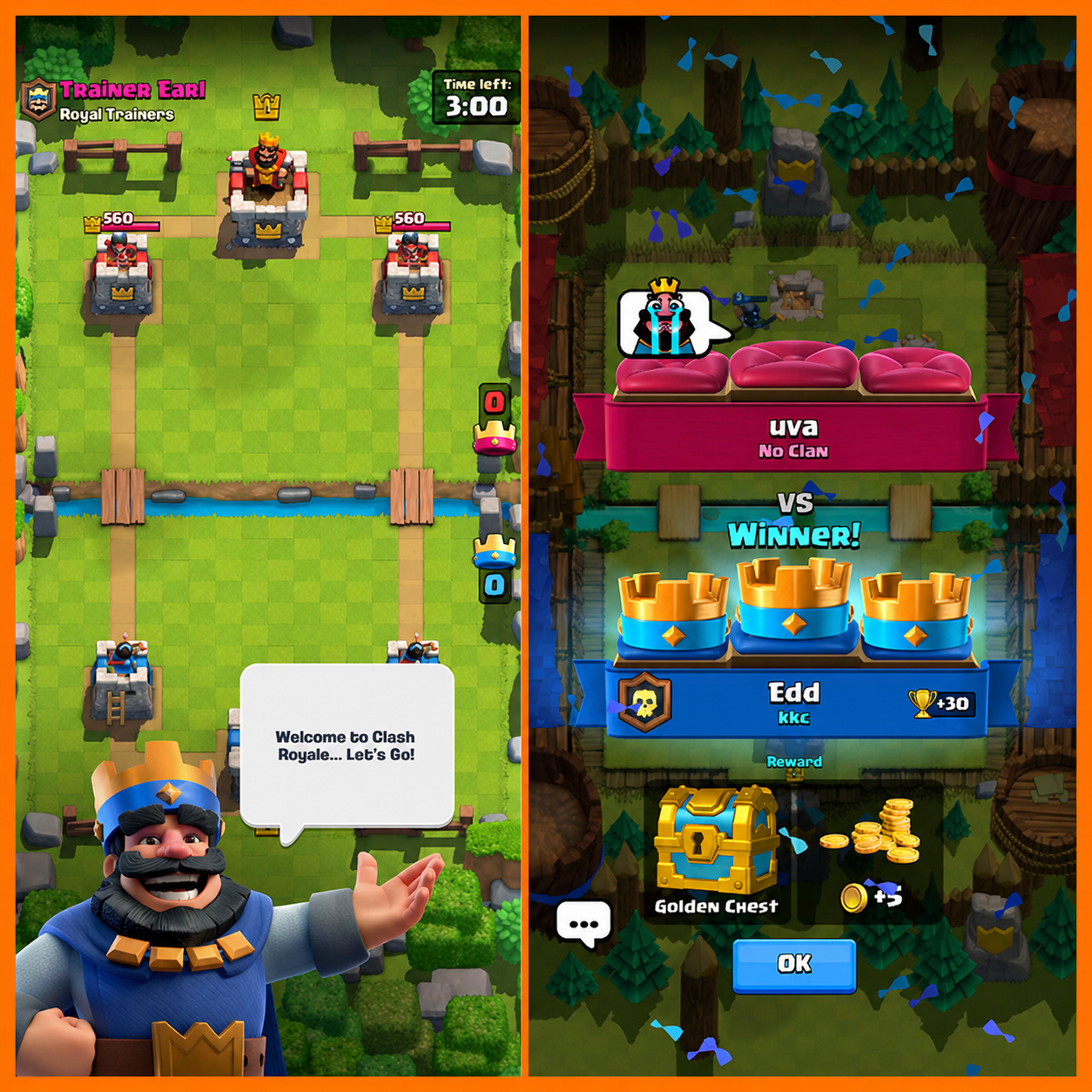
Clash Royale does this well. Your first match throws you into a real fight with minimal explanation - you figure out what your cards do by playing them. The match is tuned so you'll almost certainly win, but you have to think along the way: when do I play this card? What does this unit do? That small cognitive effort turns an essentially guaranteed win into something that feels genuinely satisfying. You didn't just win - you figured it out. And that’s a different, better feeling you simply wouldn't have if the win had been handed to you.
Ground Rule 2: Don't Just Give Them A Win. Make Them Feel Rich
Competence alone isn't enough. The first session needs to feel abundant.
The early game should overwhelm the player with rewards, like:
Wins
Bonuses
Progress bars filling up
Visual feedback
Sounds
Numbers going up
All of it should fire quickly, creating a feeling of richness that goes beyond just succeeding so players feel like the game is genuinely celebrating them.
Why? Because emotion creates memory, and memory creates attachment. A player who finishes their first session feeling competent has learned something about your game. A player who finishes feeling euphoric has formed an emotional bond with it. Those are completely different outcomes, and only one of them reliably brings players back tomorrow.
The goal is to move the player from "that was fun" to "I want that feeling again." That craving - for the specific emotional state your game produces - is the real engine of retention.
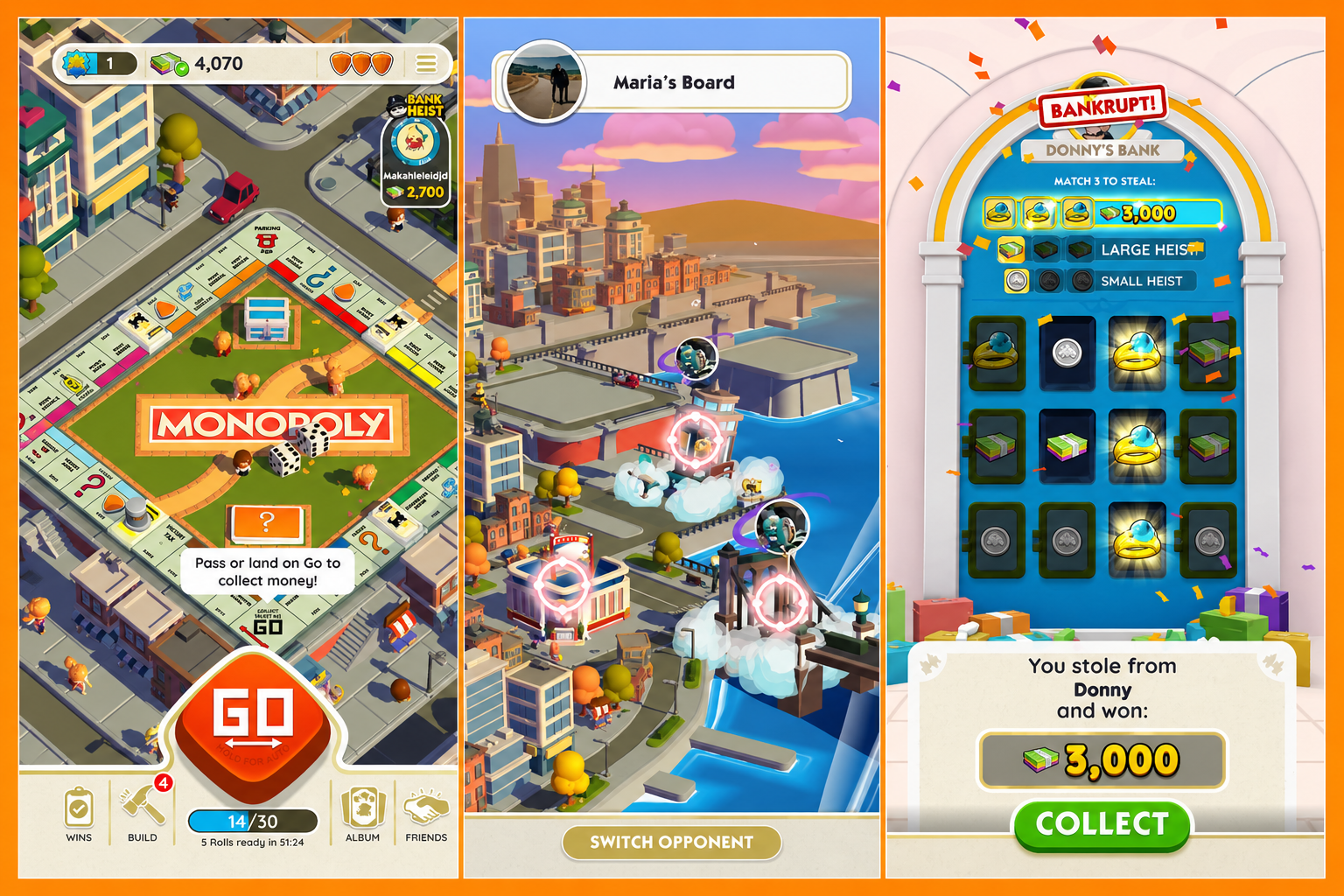
Monopoly GO! is one of the most deliberate executions of this I've seen. Open the app for the first time and within two minutes you've rolled the dice, built properties, destroyed someone else's board, robbed another player, and collected a wave of bonuses along the way. The Monopoly board game nostalgia does real emotional work here - it lowers resistance, triggers warmth, and makes everything feel familiar before you've processed the mechanics. And layered on top is a relentless stream of reward: visual, auditory, numerical, emotional. The game isn't just giving you wins. It's throwing a party for you.
By the time you surface and think rationally about what you just played, your emotional brain has already made its decision. It felt good - really good - and it wants more.
Ground Rule 3: Confusion Causes Churn, So Keep the Experience Clean
Everything built in those first minutes - the sense of competence, the emotional richness, the dopamine association - is fragile. And the fastest way to destroy it is to make the player think too hard about something that isn't the game.
Decision overload is churn. Not because players can't handle complexity, but because cognitive load and emotional immersion don't coexist well. Every unnecessary choice you put in front of a new player pulls them out of the experience and into their own head. The flow breaks. The spell breaks.
In the opening minutes, the answer to almost every design question is: remove it. Character selection, settings, mode selection, difficulty toggles - all of it can wait. What players need at the start is to stay inside the feeling you've been building.
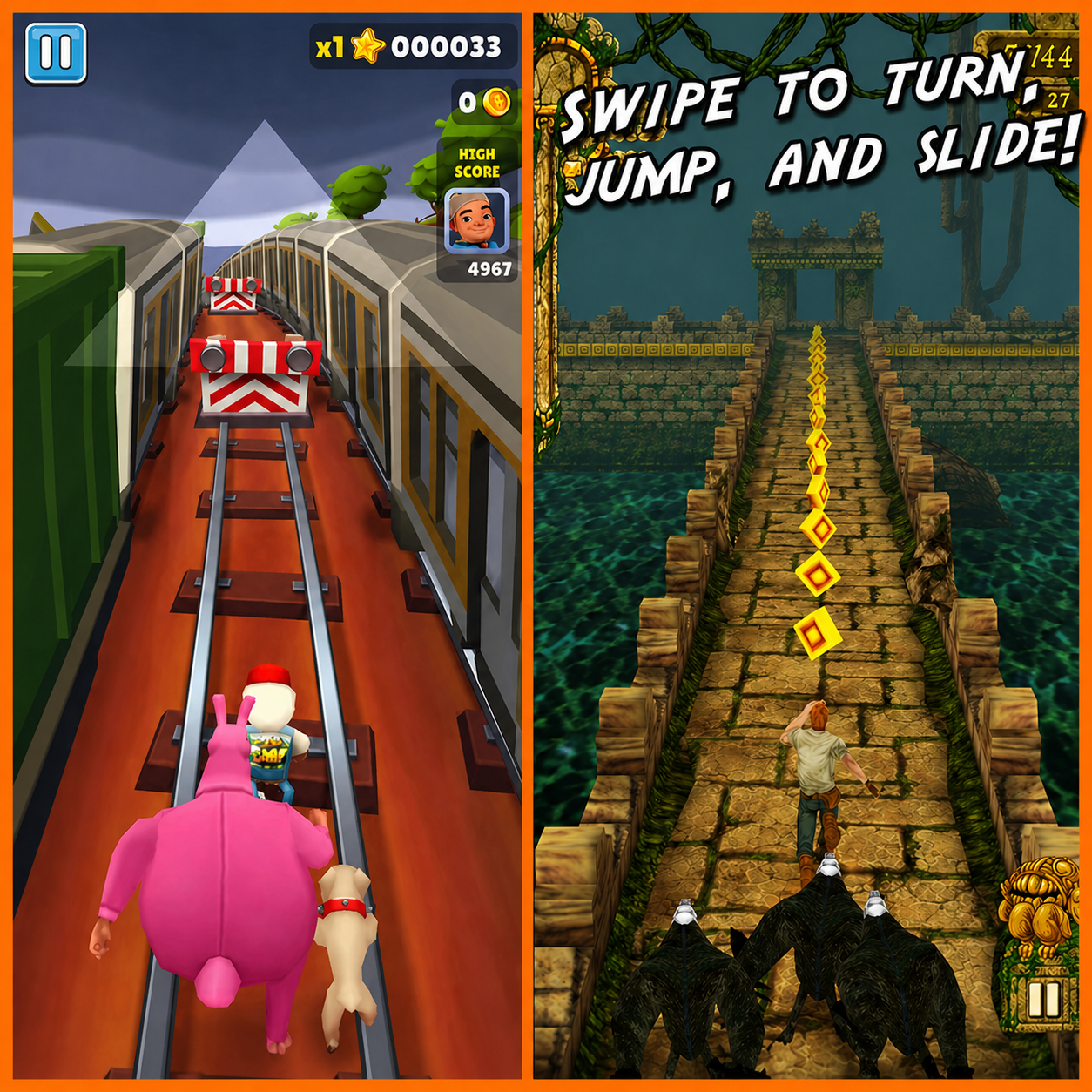
Games like Subway Surfers and Temple Run represent this ethos perfectly. There is no setup and no choices. The first level loads and the experience starts before the rational brain has a chance to evaluate it. And by the time it does, the emotional brain is already invested.
Ground Rule 4: Engineer the Habitual Hook in the Core Loop
The difference between a game that’s played once vs. one that becomes a habit lies in its core loop. When a player enters your game, they shouldn't be met with a wall of features or complex systems. Instead, they should be immediately pulled into a cycle so seamless that the brain begins to crave the next turn before the current one ends.
A truly effective core loop functions as a self-sustaining engine that makes gameplay feel like a natural reflex. The goal is to keep the momentum moving at a pace where the player never feels the "weight" of the product, only the rhythm of the reward.
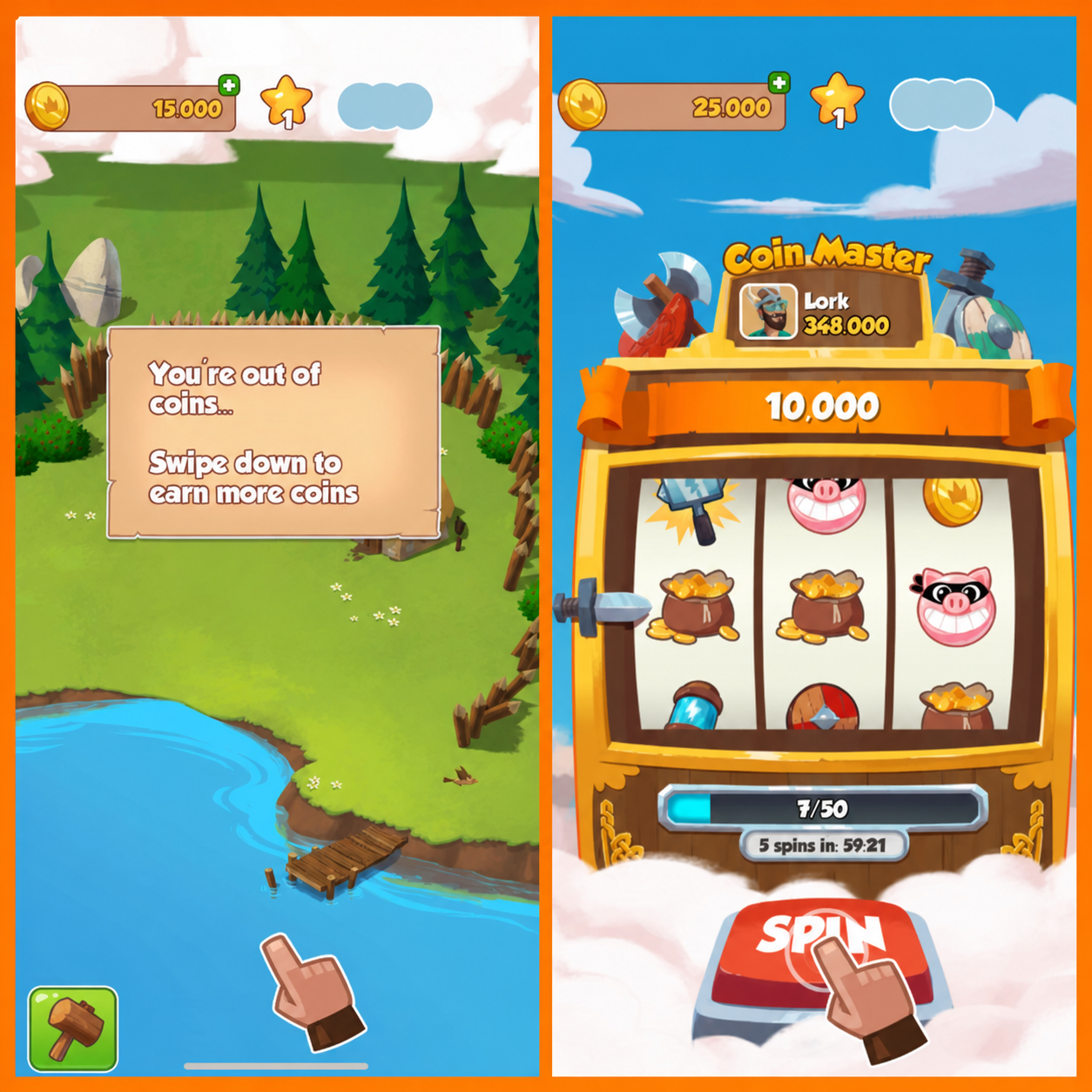
Coin Master excels at this by keeping the loop incredibly tight and alive. It begins with a simple, tangible goal: build. But the building mechanic immediately demands resources, which pulls the player directly into the spin, which is the heartbeat of the engagement. Every spin triggers a core mechanic, whether it's a raid, an attack, or a coin haul - which provides the exact dopamine hit and currency needed to go back and build. By the time the player has completed one rotation, they’re already primed for the next rhythmic exchange.
These are Ground Rules, Not a Formula
The games mentioned here are completely different from each other. And yet they share a common understanding of what the first session needs to achieve.
Ground rules don't tell you what your onboarding should look like. They tell you what it needs to do. The creative direction is yours, but underneath all of it, the goals stay the same:
Make players feel capable
Make them feel wealthy
Protect the emotional state you've built
Maintain the momentum in the core loop
Get those four things right, and you haven't just made a good first impression. You've made a decision on behalf of the player's brain - before they ever consciously made one themselves.